Quick Answer: Strength training improves cycling performance by increasing muscle fiber recruitment and force production capacity, resulting in 8-12% higher peak power output and improved sprint capability. When properly integrated with endurance training (2-3 sessions weekly during base building, 1-2 during race season), cyclists gain enhanced neuromuscular efficiency, better fatigue resistance on long rides, and 30-40% reduction in overuse injuries—all while maintaining optimal power-to-weight ratio through increased muscle mass and reduced body fat.
Research shows cyclists who properly integrate strength training see 12% greater peak power output improvements compared to cycling-only training.
Why Cyclists Need Strength Work
Cycling strength training delivers five measurable benefits:
-
- Power Output Increases – Stronger muscles generate more force per pedal stroke
-
- Injury Prevention – Reinforced connective tissue handles training stress better
-
- Muscle Recruitment Efficiency – Neural adaptations improve fiber activation patterns
-
- Sprint/Climb Performance – Enhanced maximal force production for high-intensity efforts
-
- Core Stability – Better power transfer through rigid torso positioning
Single-leg action dominates cycling biomechanics. Aerobic assistance muscles support prime movers. Core engagement maintains position during repeated force production
Critical Weight Training Movements
Compound lifts maximize time efficiency. Focus on movement quality over load.
Lower Body Power Builders
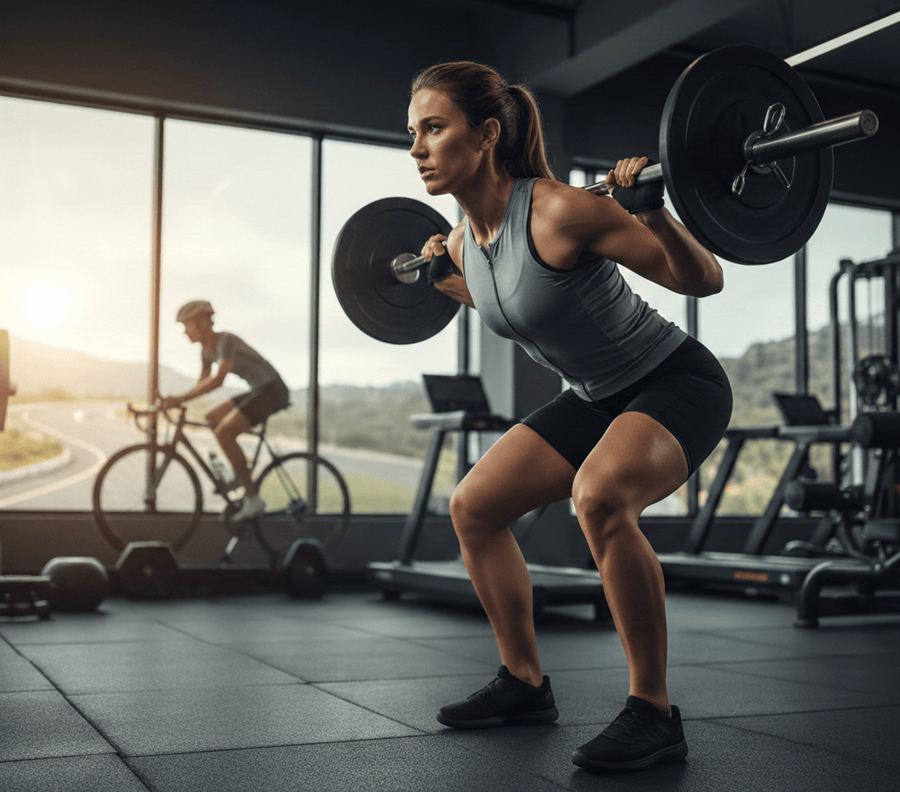
Squats target the entire pedaling muscle chain. Front squats emphasize quadriceps engagement. Back squats recruit posterior chain maximally. Execute controlled eccentric phases. Drive explosively through concentric portions.
Deadlifts strengthen hip extension patterns. Romanian deadlifts isolate hamstrings for muscular endurance. Traditional deadlifts build maximal strength. Single-leg variants correct imbalances between limbs.
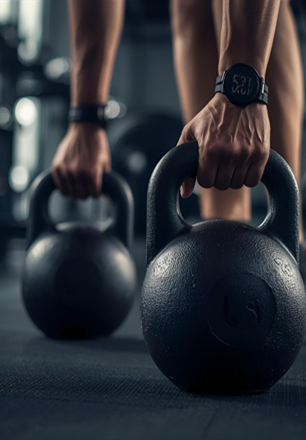
Kettlebell Swings develop power endurance. Hip thrust generates momentum. Maintain 15-25 reps for 3-5 sets. Rest 1-2 minutes between efforts.
Upper Body Support System
Bench Press builds tricep and chest strength. Stable shoulders improve aerodynamic positioning.
Military Press reinforces overhead stability. Strong deltoids reduce fatigue during long efforts.
Barbell Rows mimic handlebar pulling mechanics. Grip strength prevents hand numbness.
Renegade Rows combine core stability with upper back development. Perform 15-30 reps across 3-5 sets.
Programming Guidelines
Training Parameters
-
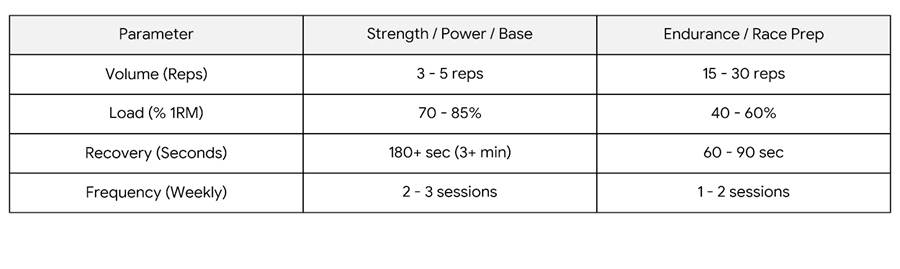
- Volume: 3-5 reps for strength, 15-30 for endurance
-
- Load: 70-85% 1RM for power, 40-60% for muscular endurance
-
- Recovery: 3+ minutes between strength sets, 60-90 seconds for endurance
-
- Frequency: 2-3 sessions weekly during base, 1-2 during race preparation
Periodization Integration
Base Phase Protocol:
-
- High-volume resistance training
-
- 2-3 weekly sessions
-
- Core emphasis
-
- Progressive overload application
Build/Specialty Maintenance:
-
- Reduced volume
-
- 1-2 weekly sessions
-
- Low-fatigue exercises
-
- Stability focus
Optimal Scheduling Strategies

Consolidate training stress. Schedule cycling strength training on easy ride days. Preserve rest days for complete recovery.
Beginners: Lift before riding. Fresh muscles maintain proper technique.
Experienced Athletes: Ride first when prioritizing cycling adaptations. Ensure residual fatigue doesn’t compromise lifting form.
Performance Tracking Methods
TrainerRoad Integration
Log “Working Sets” – efforts performed near muscular failure with 1-2 reps in reserve. Detailed tracking enables training stress analysis.
TrainingPeaks Strength Builder
Create structured workouts. Monitor all training in unified platform. Calculate training stress scores.
Benchmark Assessment
Use strength calculators to determine focus areas. Compare power-to-weight ratios. Identify limiters requiring targeted work.
Key Technical Considerations
Movement velocity matters. Explosive concentric actions recruit fast-twitch fibers. Controlled eccentrics build time under tension.
Range of motion affects adaptation. Full-depth squats increase flexibility. Partial reps target sticking points.
Breathing patterns influence performance. Exhale during exertion phases. Maintain intra-abdominal pressure through compound lifts.
Progressive overload drives adaptation. Increase weight, reps, or sets systematically. Track all variables meticulously.
Injury Prevention Protocols
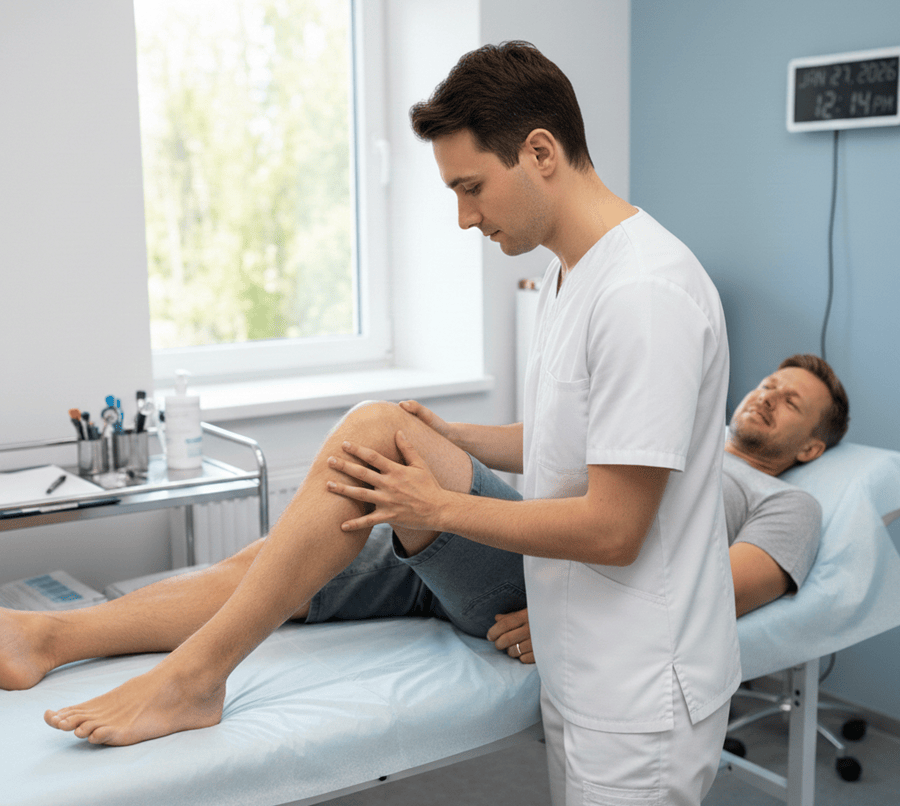
Address muscle imbalances proactively. Single-leg work corrects asymmetries. Posterior chain strengthening prevents knee issues. Core stability protects lower back.
Monitor fatigue markers. Decreased bar speed indicates accumulated stress. Form breakdown signals excessive load. Adjust volume before injuries develop.
Conclusion
Cycling strength training creates robust athletes. Systematic resistance work enhances power production, prevents injuries, and improves performance across all cycling disciplines. Implement progressively. Track meticulously. Recover completely.
Start with bodyweight foundations. Progress to loaded movements. Integrate intelligently with cycling periodization. Convert gym strength into on-bike speed through structured, data-driven approaches.
Frequently Asked Questions
How often should cyclists do strength training?
Cyclists should perform strength training 2-3 sessions weekly during the base phase for maximum gains. During race preparation, reduce to 1-2 maintenance sessions to prevent interference with cycling-specific adaptations. Schedule strength work on easy ride days or immediately after moderate rides to maximize recovery.
Will strength training make me slower at cycling?
No, properly implemented strength training enhances cycling performance. Studies show cyclists who strength train see 12% greater improvements in peak power output and 8% better time-trial performance. The key is periodization – high volume during base building, reduced volume during racing season.
What are the best strength exercises for cyclists?
Essential exercises include: squats (front and back variants), deadlifts (Romanian for hamstrings), single-leg work (pistol squats, Bulgarian split squats), core stability (planks, renegade rows), and power exercises (kettlebell swings 15-25 reps). Focus on compound movements that target the pedaling muscle chain.
Should I lift before or after cycling?
Beginners should lift before riding to maintain proper technique with fresh muscles. Experienced athletes can ride first when prioritizing cycling adaptations, but ensure residual fatigue doesn’t compromise lifting form. Best practice: schedule strength training on easy ride days or rest days.
How long does it take to see strength training results in cycling?
Neural adaptations occur within 2-4 weeks (improved muscle recruitment). Measurable strength gains appear in 4-6 weeks. Transfer to cycling performance becomes evident in 8-12 weeks with consistent training. Full integration requires 12-16 weeks of periodized programming.
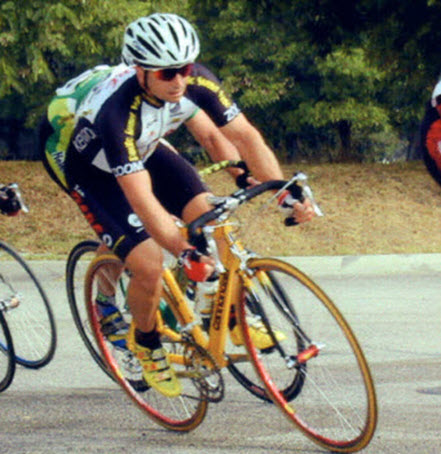
James Hickman is a former Expert coach with USA Cycling who coached cyclists across all skill levels, from CAT 2 racers to intermediate and beginning riders. He also served as a coach for the Leukemia and Lymphoma Society’s Team In Training program, where he successfully trained individuals of varying abilities to complete century (100-mile) rides, combining his passion for cycling with meaningful community impact.
Top Amazon Products for Cycling Leg Strength Training
1.PowerBlock Elite EXP Adjustable Dumbbells
These space-saving dumbbells adjust from 5 to 50 pounds. Durable Steel Build. Perfect for progressive overload training.
1.Yes4All Adjustable Plyometric Box
This 3-in-1 wooden box offers 20/24/30-inch heights. Built from solid wood for stability. Ideal for explosive power development.
1.WHATAFIT Resistance Bands, Exercise Bands
The exercise bands come with 5 different resistance level 10lbs, 20lbs, 30lbs, 40lbs and 50lbs in 5 different colors.
1.CAP Barbell Power Rack
This budget-friendly rack supports 500 pounds. Features pull-up bar and safety catches. Essential for serious strength gains.
We are an Amazon affiliate and earn from qualified Amazon purchases with no cost to you. This is for ANY product that you purchase through our links.